

This is post two in an ten-part series on conflict, community, and the hidden patterns keeping us all stuck. If you missed post one — start there. If you've been here since the beginning — you already feel what's coming.
A note before you read: If you saw an earlier version of this post, you may notice it reads differently now. I received feedback from people in my community and from my editors that the original tone wasn't fully aligned with the voice I'm trying to bring to this work — more heat than light in places. They were right. I've revised it. The argument is the same. The heart behind it is clearer. Thank you to everyone who pushed back.
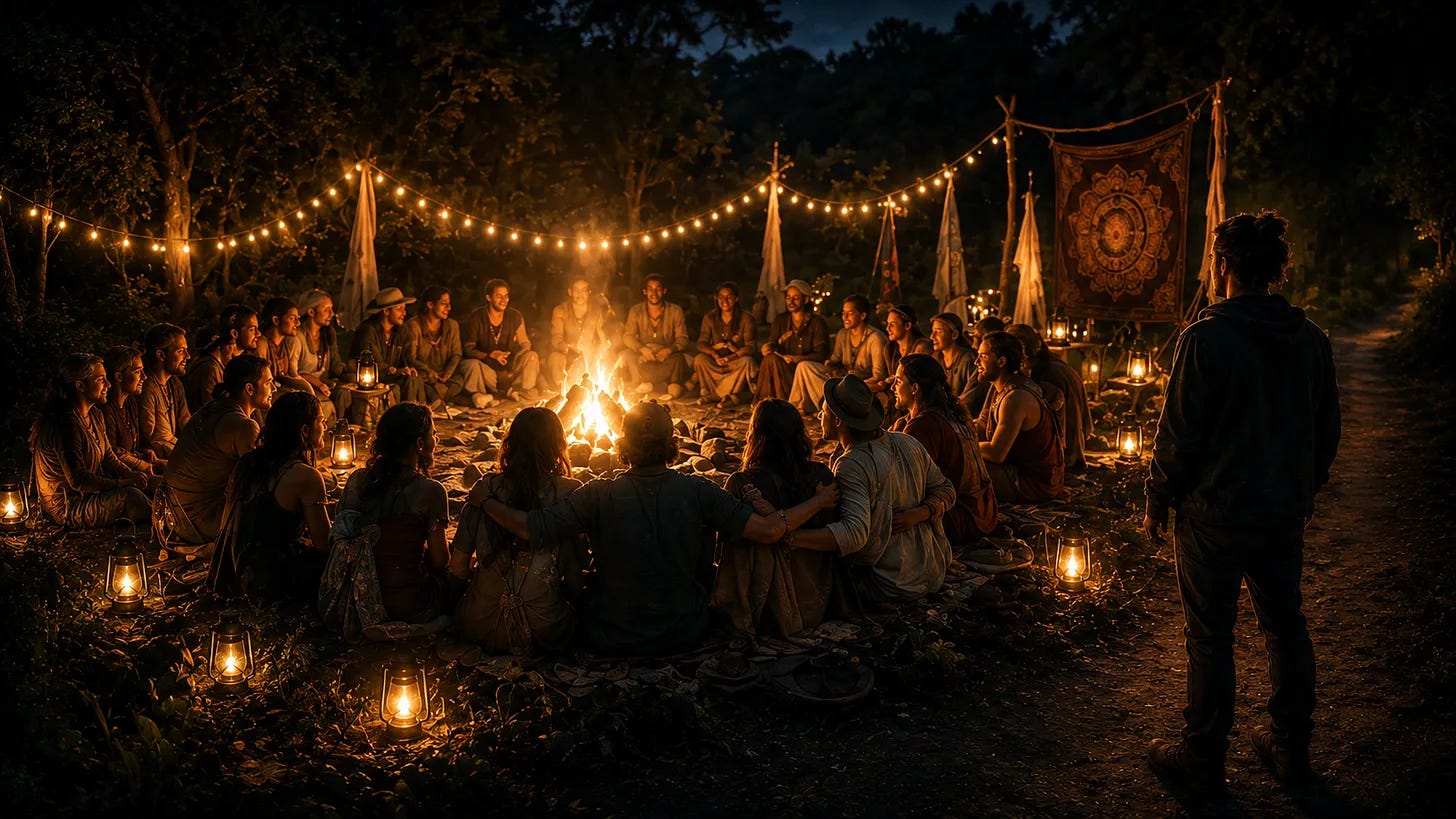
I know what it feels like to be canceled.
Not the social media kind — the kind that happens quietly, in your own community, among people you thought knew you. Where one day you’re welcome and the next day you’re not, and nobody will tell you exactly why, and the people who used to hug you when you walked in now look past you at the door.
I’m not writing this piece as someone who has all the answers. I’m writing it as someone who has been inside this thing and had a long time to think about what it actually is.
And what I’ve come to understand is this — removing someone from a community is sometimes the right thing to do. Genuinely. There are situations that require it, and leaders who do it thoughtfully and with due process are doing exactly what their community needs.
But that’s not what I’m watching happen most of the time.
Most of the time what I’m watching is pain becoming a weapon. Hurt becoming a verdict. And communities that were built on radical acceptance quietly becoming the most conditionally welcoming spaces I’ve ever been in.
That’s what I want to talk about. Not because I’m angry. But because I think we can do better than this — and I think most of us, if we’re honest, already know it.

The Communities We Built
You know these spaces. The ones that proudly proclaim: we welcome all, in your good, your bad, and your ugly. All of your emotions are welcome here. This is a place for exiles.
We invite sex workers, deviants, derelicts, all the weirdos, outcasts, and misfits who weren’t welcome anywhere else. We promote radical acceptance, unconditional love, containers for transformation.
And then the moment someone does or says something we don’t like, we cancel them.
We banish them. We turn our backs. We offer no path to redemption or re-entry.
The irony would be almost funny if it weren’t so damaging. Because what we’re doing has a name. It’s cancel culture. And the fact that we’ve wrapped it in crystals and conscious language doesn’t make it any less of what it is.

Let’s Name the Thing
Cancel culture isn’t just a social media phenomenon. It isn’t just something that happens to celebrities or politicians. It lives right here, in our circles, in our festivals, in our retreats and communities — and we need to stop pretending otherwise.
What makes it particularly painful in spiritual spaces is that it masquerades as something noble. We call it holding space for harm. We call it community accountability. We call it protecting the container.
But when there’s no investigation, no conversation, no due process, no opportunity for the accused to even understand what they did — that’s not accountability.
It’s something else. And I think most of us know that, even when we don’t say it out loud.

The Most Common Trigger Nobody Talks About
Here’s what actually drives the majority of cancellations I’ve witnessed in conscious community spaces.
Breakups.
Someone’s relationship ends. One person — usually the one who got there first or speaks louder or cries harder — works the room. They tell their friends. Their friends tell more friends. Within days, a social verdict has been rendered. The other person starts getting cold shoulders, uninvitations, and suddenly finds themselves on the outside of a community they helped build.
No consent violation. No abuse. No pattern of harm. A relationship ended, someone was hurt, and hurt became weaponized into exile.
I’ve been approached more times than I can count by people — men and women — asking me to take their side after a breakup. To validate their narrative. To effectively ban their ex from the community based solely on their account of what happened between them.
I won’t do it. Not once. Not ever.
Not because I don’t care about their pain. Their pain is real. But pain is not evidence. Hurt feelings are not grounds for exile. And a breakup, no matter how badly it went, does not give one person the right to dismantle another person’s entire social world.
When you come to a community leader asking them to remove your ex without a fair process — without the other person even knowing a complaint has been made, without any opportunity for response — something has gone wrong. Not in you as a person. But in the culture we’ve built together that made that request feel reasonable.

A Story I Need to Tell
Let me be specific about one encounter that crystallized exactly why I hold this line.
A woman came to me asking to meet in person. When we finally sat down, she told me about a conflict with an ex-boyfriend — how being around him made her uncomfortable, how she felt he was a danger to the community.
And then she asked me to exile him.
The request came with one condition: please don’t tell him we spoke.
I want you to sit with that for a moment. She wanted me to remove someone from the community, but I wasn’t allowed to tell him why, who made the complaint, or give him any opportunity to respond. He would simply find himself suddenly unwelcome, with no explanation, no recourse, no understanding of what had happened or why.
I couldn’t participate in that. Not because her discomfort wasn’t real — I believe it was. But because removing someone without their knowledge, without their voice, without any process at all isn’t protection. It’s a different kind of harm, delivered more quietly.
I’ve sat with that conversation many times since. And what I keep coming back to is this — she wasn’t a bad person. She was in pain and she came to the person she thought could fix it. The failure wasn’t hers. It was the culture that taught her that exile was the solution.
When Removal Is the Right Call
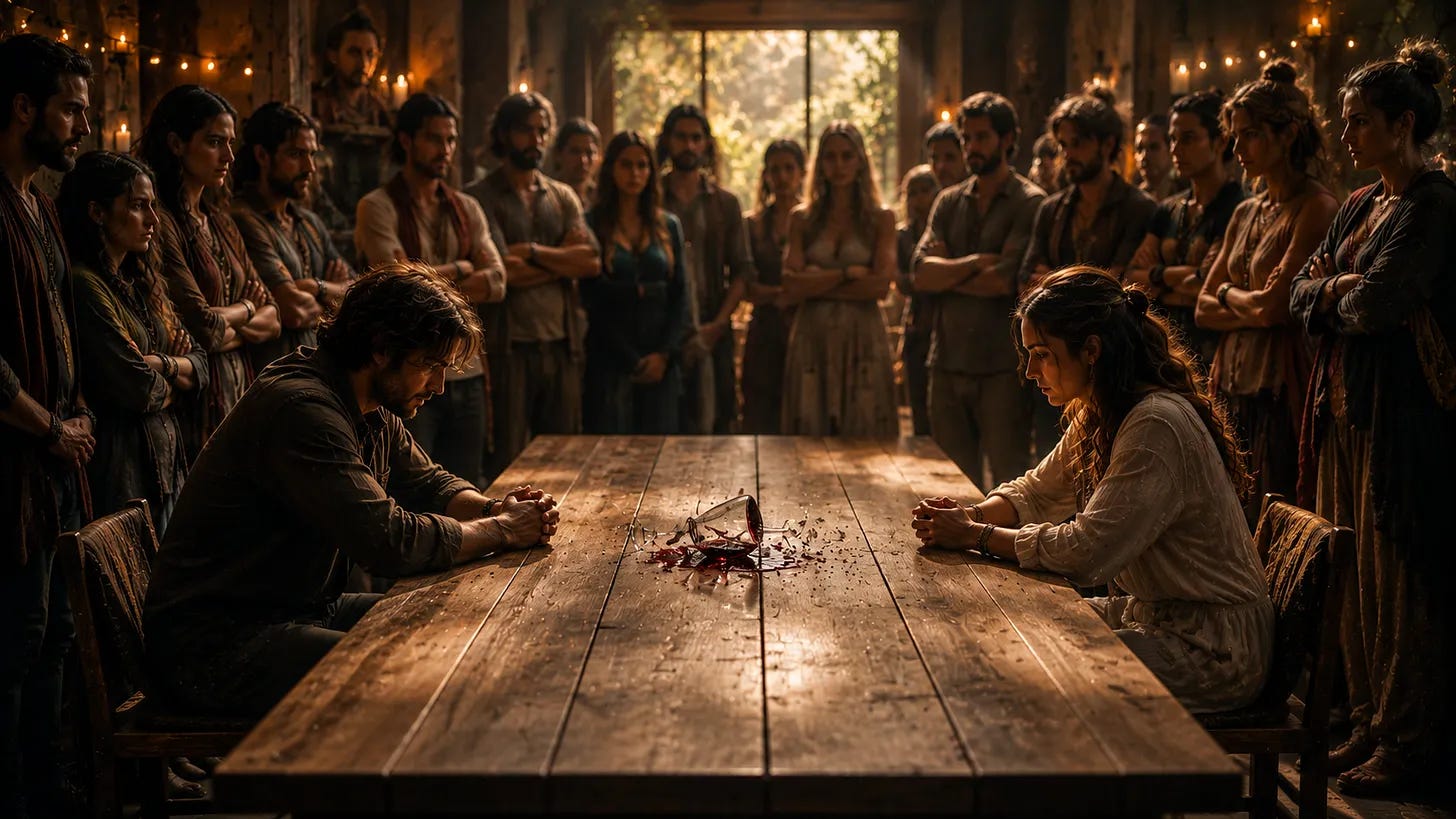
I want to be clear, because I know this will be misread if I’m not. I have removed people from my community. I will again.
There are situations that warrant it:
• Consent violations — when someone has crossed a clear boundary and refuses accountability
• Substance abuse that creates active harm to the people around them
• Predatory patterns — repeated behavior targeting vulnerable people, documented and verified
• Categorical refusal to engage — when someone has been given every genuine opportunity to participate in a repair process and has chosen not to
In those cases, removal is not cancel culture. It’s leadership. It’s protecting the people in your care.
The difference is process. The difference is evidence. The difference is that the person knows what they’re being accused of and has been given a genuine opportunity to respond.
That’s accountability. What we’ve been calling accountability in conscious community is often something else entirely — and I think we owe it to each other to name that honestly.

Conflict Resolution vs. Conflict Removal
Somewhere along the way, we’ve confused conflict resolution with conflict removal. They are not the same thing.
Real conflict resolution requires:
• Curiosity about what’s actually happening beneath the surface
• Willingness to sit with discomfort while seeking understanding
• The capacity to hold complexity rather than demanding immediate certainty
• Recognition that people are rarely simply good or bad
• Creating pathways for accountability AND repair
Conflict removal looks like:
• Immediate banishment when someone makes us uncomfortable
• Verdict rendered before investigation begins
• One person’s narrative treated as established fact
• No process, no dialogue, no opportunity for response
• Gossip doing the work that conversation should do
The moment we remove someone to avoid the discomfort of actual resolution, we haven’t solved anything. We’ve just relocated the problem — and quietly created a community where everyone wonders when it will be their turn.
How Gossip Runs the Whole Machine
Cancel culture in community spaces doesn’t happen in a vacuum. It runs on gossip. And the pipeline is almost always the same:
• Someone is hurt or upset by another person
• Instead of going to that person, they tell three friends
• Those friends tell three more people
• Within 48 hours there’s a consensus that this person is problematic
• Leadership hears the whispers, treats them as fact, and makes a decision
• The person is removed before they even know there’s a problem
The exiled person never got a chance to understand what they did, why it was harmful, or how they could repair it. No conversation. No curiosity. No discernment between the story being told about someone and what actually happened.
I’ve been on the receiving end of this. And what I can tell you from that place is that it doesn’t feel like accountability. It feels like disappearing.
If This Is Landing Hard
If you’re reading this and something is stirring, I don’t want you to push that away. I’m not pointing a finger at anyone. I’ve participated in versions of this myself — taken someone’s side too quickly, made a judgment based on incomplete information, let social pressure influence a decision I should have made more carefully.
This culture didn’t build itself. We all contributed to it, most of us without realizing it, because it felt like the caring thing to do.
If you’ve ever pushed someone out of a shared community after a breakup, or made a decision about someone based on what you heard rather than what you investigated — I’m not here to shame you. I’m here to ask whether, if you’re honest with yourself, it resolved anything.
Most of the time, it doesn’t. It just moves the pain somewhere else and leaves everyone a little less safe than they were before.
What I’m Actually Asking For
If you’re holding a community — a festival, a retreat space, a spiritual group, a workshop series — I’m not asking you to tolerate harm. I’m asking you to pause before you cancel anyone and sit with a few honest questions.
• Did I hear from everyone involved — including the person being accused?
• Am I making a decision based on evidence, or on narrative?
• Did I offer a process for dialogue, or did I just remove the problem?
• Is this actually about safety, or about someone’s social comfort?
• Would I be comfortable if the person I’m removing could see exactly how this decision was made?
These aren’t gotcha questions. They’re the questions I ask myself. And sometimes the honest answer is that I moved too fast, or didn’t hear enough, or let the pressure of the moment override the process I know matters.
We’re all learning. That’s the whole point.
The Community We’re Actually Building
The way we handle conflict reveals what we actually value — not what we say we value in our mission statements.
When we cancel people at the first sign of discomfort, we build communities where people learn to hide their struggles, perform perfection, never challenge anything, and never fully trust that they’re actually welcome.
That is the opposite of transformation.
I want communities where people can be imperfect and still belong. Where conflict is an opportunity for deeper understanding, not grounds for permanent exile. Where accountability includes the possibility of repair. Where all are welcome actually means something.
Not all are welcome until you upset someone. Not all are welcome unless you’re perfect.
Just — all are welcome.
We were supposed to be building something different than the world we came from. Cancel culture already exists out there. We don’t need to import it in here and call it healing.
I believe we can do better. And I think you do too — otherwise you wouldn’t still be reading.
---
We’ve looked at how gossip travels without accountability, and what happens when a whole community picks it up and calls it justice. Next week we go deeper — into what’s really driving the need to win, and why being right has become more important than being in relationship. This is post two of ten.
—
With love, honesty, and deep respect for the work,
Shiva J
Typed in Google Documents with help from Grammarly and The Scribe professional proofreading and editing service.